Skip to content
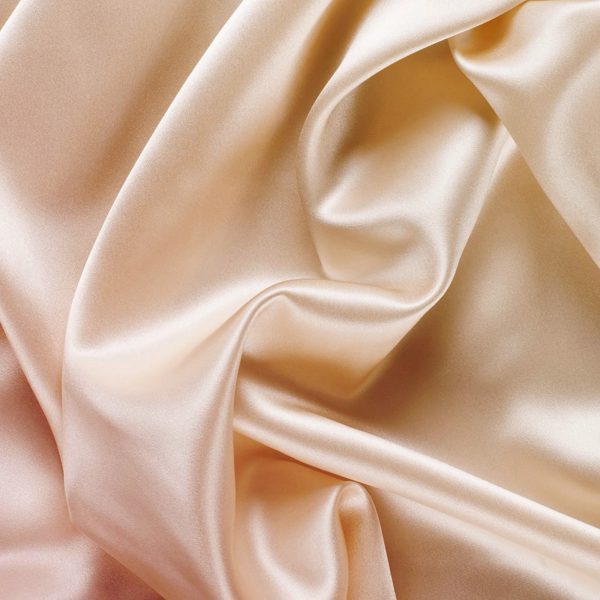
Silk Fabric
Silk Fabric Introduction
Basic Parameters
-
Fiber Structure
- Raw Material: Mulberry silk (domestic silkworm) or tussah silk (wild silkworm), both natural protein fibers.
- Single Filament Form: Flat ribbon shape, 10-20 microns in diameter (mulberry silk is finer), with a smooth and slightly curved surface.
- Composition: 70%-80% fibroin and 20%-30% sericin; degummed silk (cooked silk) becomes softer.
-
Density & Weight
- Lightweight (e.g., Habutai): 40-60 g/m², ideal for summer clothing.
- Medium-weight (e.g., Crepe de Chine): 80-120 g/m², commonly used in dresses.
- Heavyweight (e.g., Satin): 120-200 g/m², suitable for winter coats.
-
Physical Properties
- Density: 1.30-1.37 g/cm³ (raw silk) vs. 1.25-1.30 g/cm³ (degummed silk).
- Moisture Absorption: Regain rate of 11%-12% (mulberry silk slightly lower than tussah).
- Strength: Breaking strength of 2.6-3.5 cN/dtex, elongation at break ~20%.
Core Functions
-
Comfort
- Thermal Regulation: Low thermal conductivity ensures warmth in winter and coolness in summer.
- Skin-Friendly: Smooth fibers minimize friction, ideal for sensitive skin.
-
Practical Performance
- Luster & Aesthetics: Triangular fiber structure creates a prismatic effect for natural shine.
- Breathability & Moisture Absorption: Porous structure enhances air circulation; outperforms cotton in moisture absorption.
- Lightweight: Among the lightest and warmest materials, alongside silk floss.
-
Special Uses
- Industrial Applications: Resistant to acids (except sulfuric acid) and insulating properties for protective gear.
- Cultural Value: Traditional craftsmanship (e.g., woven brocades) carries historical and artistic significance.
Notes
- Care: Avoid direct sunlight, harsh rubbing, and hand wash in cold water to prevent fiber damage.
- Limitations: Poor abrasion resistance and chemical sensitivity; use mild detergents.
Product Description
Silk Fabric
Reviews
There are no reviews yet.